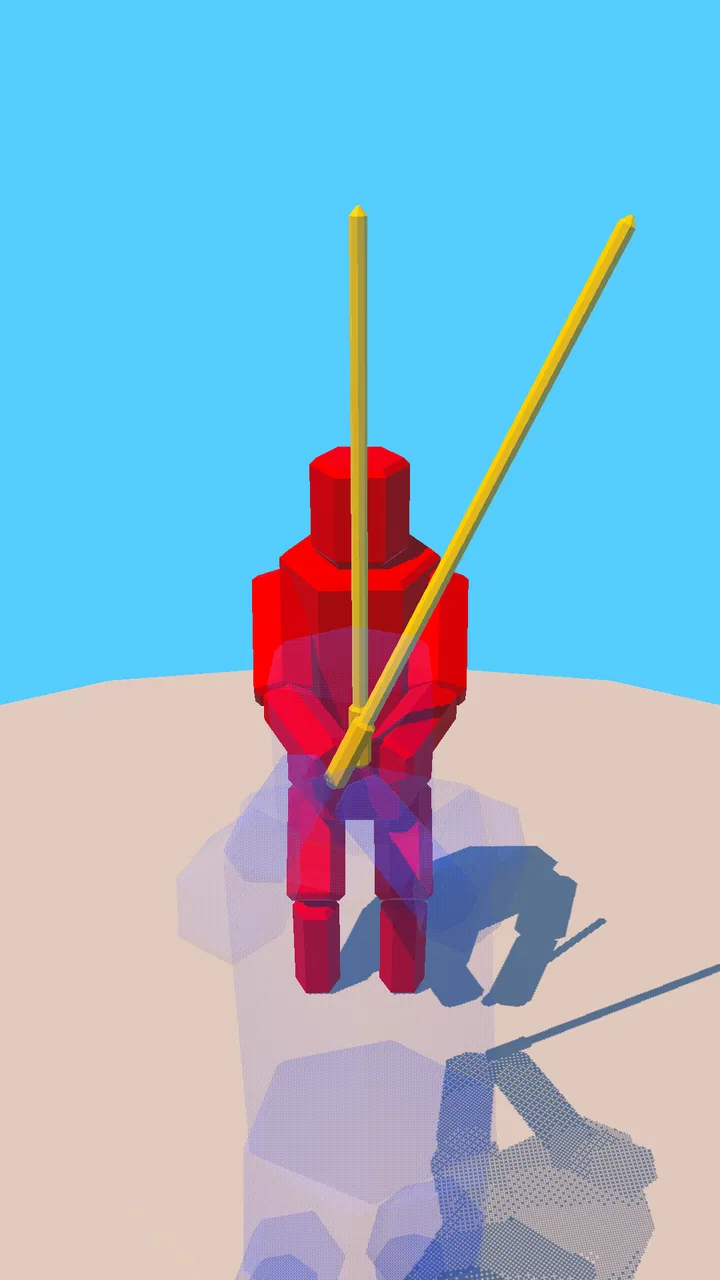
Bushi Fight
- 4.3
- Rating
- 1.00M
- Installs
- Free
- Price

 Analysis by App-foxy
Bushi Fight is a compact action game built around a simple urge: get into the fight and bring the enemy down. I found its appeal in that directness. It does not ask me to learn a large world, manage a complicated roster, or spend time decoding a long premise before playing. The store summary, “Slay the enemy!”, captures the basic mood, while the short description, “Bushi Fight,” points toward its samurai-flavored identity.
Developed by KAYAC Inc., the game is free to play on Android devices running version 6.0 or later. It is listed for a Teen audience, so I would not treat it as a universal family game. Its current version is 019, and the game has passed over one million installs, which gives it a meaningful player footprint for a relatively focused action title. I also noticed an average score of 4.1 from around 1,600 ratings, a useful sign that the core idea works for many players without suggesting that every player will enjoy its limits.
How I settled into the basic Bushi Fight routine
My first recommendation is to approach Bushi Fight as a game of short, repeatable sessions rather than as a large adventure that needs a long uninterrupted evening. The most comfortable workflow is simple: start a round, pay attention to the immediate threat, learn what caused a mistake, and try again with one adjustment in mind. That rhythm makes the game easy to fit into a spare moment, but it also means careless play becomes obvious quickly.
You May Also Like

 Blood Strike: 2.5 Anniversary
Blood Strike’s Loadouts Turn Every Drop Into a Tactical Gamble
A close look at Blood Strike’s custom loadouts: how fast access to signature weapons reshapes its battle royale rhythm, rewards preparation, and narrows the gap between fights.

 Pandora - Music & Podcasts
Pandora’s Music Is Easy to Start, but Harder to Recover
Pandora’s strength is its low-effort path from a seed to a station. Its weak spot is how much confidence it asks you to place in connection, setup, and quiet recovery.

 8 Ball Pool
 Is Built on Rivalries, Rematches, and Routine
A close look at the rivalries, rematches, shared routines, and unanswered safety questions that turn a quick pool match into a persistent mobile community.

 Samsung Music
’s Quiet Strength Is Playing What You Already Own
Its reach comes less from spectacle than from dependable access to a personal library. That simplicity is both the app’s strongest retention engine and its ceiling.

 AccuWeather: Weather Radar
AccuWeather Review: A Quick, Clear Forecast for Everyday Decisions
For everyday plans, the best forecast is the one you can understand quickly. AccuWeather makes rain timing, radar, and local conditions easy to act on, with a few trade-offs.

 Hill Climb Racing
Why Hill Climb Racing Still Turns Crashes Into One More Run
A tiny car, a bumpy hill and one more upgrade: Hill Climb Racing keeps resurfacing because its simple chaos makes every near-miss feel personal.
More From Our News Desk
View All News


The opening appeal comes from the action itself. A straightforward objective is valuable on a phone because I can understand what I am supposed to do almost immediately. There is less mental overhead than in an action role-playing game filled with equipment screens, quest logs, crafting menus, and several currencies. If I want a focused burst of combat rather than a second job to maintain, this is the kind of design that makes sense.
That simplicity should not be mistaken for automatic ease. Fast action games often punish the habit of tapping without watching. I got more from each attempt when I treated enemy movement as information instead of reacting only after an attack had already started. A useful beginner habit is to pause for a moment at the beginning of a confrontation, identify the most immediate danger, and then act deliberately. Even when the controls feel approachable, timing and attention still decide whether a run feels controlled or chaotic.
A realistic everyday use case is a short break between tasks. I can play a few attempts while waiting for an appointment or during a commute, provided I am not expecting a deep story session. The game suits that situation because its central purpose is immediately readable. However, I would avoid starting it when I need something relaxing in the background. Combat demands attention, and a distracted player is likely to repeat the same mistake rather than make useful progress.
The first few sessions are also the right time to decide whether the game’s narrow focus works for you. Players who enjoy learning an opponent’s rhythm and improving through repetition will probably find a satisfying loop. Players who need exploration, character conversations, extensive customization, or a long campaign may feel that the experience stops short of what they want. Bushi Fight is strongest when judged as a concentrated action game, not as a replacement for a full-scale console adventure.
What I would do before chasing better results
I would begin with a clean, consistent control setup. If the game offers control or display choices on your device, test them before trying to improve your performance. A layout that looks attractive can still make a thumb travel too far, while a familiar arrangement may help more than a theoretically faster one. The important point is to change one thing at a time. If I alter several options and then play better or worse, I cannot tell which adjustment mattered.
I also recommend checking the sound level before a serious session. Audio can help establish the pace of an encounter, but it can become distracting in public or late at night. If you play without sound, compensate by watching animation and spacing more carefully. This is not a hidden advantage or a special technique; it is simply a trade-off. Sound may improve awareness, while silence may make the game easier to use in everyday situations.
Screen comfort matters more than many players expect. On a smaller phone, fingers can cover part of the action, especially when the important threat approaches from the edge of the display. I found it useful to hold the device in a way that leaves the central combat area visible and to avoid gripping so tightly that quick inputs become stiff. A case with raised edges can also change how comfortably the thumb reaches the screen, so a setup that works on one phone may feel awkward on another.
Before investing time in a long improvement session, check that your device is behaving consistently. Battery-saving behavior, notifications, or a crowded touchscreen can interrupt a precise attempt. The game itself is not necessarily the cause of every missed input. Experienced players often create a repeatable starting routine: close distractions, set a comfortable brightness, choose the same grip, and begin only when they can give the encounter full attention. That routine makes practice more meaningful because the conditions are less variable.
There is another practical setting decision: whether to play with the phone held in the position that feels most natural or the one that gives the clearest view. Comfort should win for long sessions, but visibility matters during difficult encounters. If your hand blocks the action, a small change in grip can be more valuable than frantic tapping. I would test this early, before blaming the controls for errors caused by poor sightlines.
Repeatable habits that make each attempt more useful
The fastest way to improve is not to play every attempt at maximum speed. I prefer a three-step pattern. First, survive long enough to observe the opponent. Second, identify the moment when I usually make a mistake. Third, concentrate on that single moment in the next attempt. This turns failure into a specific lesson. Without that structure, it is easy to finish a run knowing only that something went wrong.
One non-obvious benefit of a focused action game is that it exposes personal habits. I tend to act too early when an enemy appears to leave an opening. Recognizing that tendency lets me delay my response and watch for a clearer signal. Another player may have the opposite problem and hesitate so long that an opportunity disappears. Bushi Fight works well as a small test of those instincts because its premise leaves little room to hide behind menu planning or equipment upgrades.
I would also keep the early attempts consistent. Do not change your grip, volume, control arrangement, and playing position after every defeat. Consistency lets you compare attempts fairly. If a change improves your results, keep it for several rounds before deciding whether it is genuinely useful. This is especially important on a touchscreen, where a perceived control problem may actually be caused by fatigue or by holding the phone at a different angle.
When an encounter becomes difficult, focus on positioning and timing before trying to increase speed. Fast inputs are not automatically efficient. A rushed action can put you in a worse position, while a measured response may create the room needed for the next move. I would rather complete a sequence safely than chase a flashy result that depends on luck. That approach may feel slower at first, but it produces more reliable progress.
Short practice blocks are better than endless retries once concentration falls. I have found that the final attempts in a tired session often teach very little because I repeat the same response without evaluating it. A brief break can reset attention. This is one reason the game’s mobile format works: I can stop before frustration turns the session into unproductive repetition, then return with a clearer idea of what to change.
For players who want a faster pattern, I suggest using a simple mental checklist before each serious attempt: where is the main threat, what mistake ended the last attempt, and what single response will I test now? It takes only a moment, but it prevents random experimentation. The habit is useful precisely because it does not depend on an unconfirmed feature or a complicated system. It is a way of extracting more value from the action that is already present.
Where the game’s focused design starts to feel limited
The same directness that makes Bushi Fight approachable can also make it feel narrow. If you expect a broad progression system, a large cast, or a story that keeps unfolding, you may reach the edge of its appeal quickly. The game’s identity is tied to combat, so players who need variety between fights should compare it with action titles that offer exploration, puzzles, or more substantial character development.
I would also be cautious about recommending it to anyone looking for a completely passive game. Even a short session requires attention, and the Teen content rating means parents should make their own suitability decision rather than assuming that a simple presentation makes it appropriate for younger children. The rating is part of the practical buying decision, especially when the device is shared with a family.
Another limitation is the natural pressure created by repetition. Repeating an encounter can be satisfying when each attempt reveals something new, but it can become tiring if you do not enjoy refining a response. This is where Bushi Fight differs from many casual puzzle games. A puzzle may let you slow down and reason through a board, while this action game asks you to combine observation with timely input. If your preferred phone games are calm, turn-based, or story-led, this may not be the best fit.
The free price makes trying it easy, but “free” should not be confused with a guarantee that every player will find unlimited value. The right question is whether the core combat loop stays enjoyable after the novelty fades. I would give it a fair test across several short sessions, then decide based on whether I am improving and still looking forward to another attempt. That is a better measure than judging the game after only the first few minutes.
Compared with a typical large action game, Bushi Fight has less baggage. There is no need to commit to a sprawling map or remember a complex build before returning. Compared with a very casual tap game, it asks more from the player and offers less of a background experience. Its middle ground is clear: it is more focused and demanding than a disposable time-killer, but less expansive than a full action adventure.
Players using older Android hardware should remember that the minimum operating-system requirement is Android 6.0. Meeting that requirement does not automatically make every device equally comfortable for fast touchscreen play. Screen size, touch responsiveness, and general device condition can affect the experience. I would test the game on the actual phone you plan to use rather than assuming that compatibility alone says everything about comfort.
Who should play, and who should choose something else
I would recommend Bushi Fight to someone who likes compact action challenges, samurai-inspired presentation, and the satisfaction of turning a failed attempt into a better one. It is particularly suitable for players who enjoy building a physical rhythm: observe, wait, respond, and repeat. The game can also work for a person who wants a free title that is easy to understand without committing to a large fictional world.
I would steer a different friend toward another type of game if they want deep customization, cooperative play, a long narrative, or a relaxed experience that can run while they are multitasking. Those needs are not minor preferences; they are outside the reason to choose this title. Bushi Fight’s value comes from its concentrated action, so choosing it for features it is not built around would create disappointment.
It is also not my first choice for someone who becomes frustrated by repeated failure. Improvement depends on accepting that an attempt may end before you feel ready. The game is more rewarding when you can ask, “What did that exchange teach me?” rather than only, “Why did I lose?” That mindset is not required for every action game, but it matters here because the straightforward premise puts the emphasis on execution.
The rating history gives a helpful but limited signal. An average of 4.1 from roughly 1.6 thousand ratings suggests a generally positive response with room for disagreement. I read that as a reason to try it, not as proof that it will suit everyone. The install count, now above one million, indicates that the concept has reached a substantial audience, while the smaller review total reminds me not to treat popularity as a detailed explanation of the experience.
My final judgment after using it as a repeatable action game
Bushi Fight succeeds when I keep my expectations precise. It is a free action game from KAYAC Inc. that puts the fight first, and that focus gives it a clean identity. I like that I can understand the purpose quickly, build a simple practice routine, and return for another attempt without preparing a large inventory or remembering a complicated plot.
Its weaknesses are connected to the same design choice. The concentrated combat may feel repetitive to players who need broader variety, and touchscreen comfort can influence how fair or responsive the action feels. The Teen rating also means it deserves a little more consideration before being handed to a younger player. These are not reasons to dismiss it; they are reasons to choose it for the right kind of session.
My strongest advice is to play deliberately. Check your basic setup, keep your grip consistent, change one variable at a time, and treat each defeat as a small experiment. Those habits make the game feel more skillful and reduce the temptation to blame random tapping. The best reason to try Bushi Fight is its focused loop: short action, clear feedback, and room to improve through attention.
For me, it earns a recommendation to fans of compact samurai-style action who enjoy repetition with a purpose. I would not present it as a substitute for a full adventure or a social multiplayer game. But if you want a straightforward free challenge for Android 6.0 or later, and you are comfortable with a Teen-rated action experience, this is a focused option worth testing.
FAQs for Bushi Fight
01What is Bushi Fight and what are its main features?
Bushi Fight is an action-packed mobile game where players engage in epic battles using legendary warriors. The game features stunning graphics, a variety of characters with unique abilities, and several engaging modes such as story, versus, and online multiplayer. Players can customize their warriors and participate in regular events for exclusive rewards.
02Is Bushi Fight free to play, and are there in-app purchases?
Bushi Fight is free to download and play, offering a range of content accessible without payment. However, it includes in-app purchases that allow players to buy additional characters, skins, and boosts to enhance their gameplay experience. Players can enjoy the game fully without spending, but purchases can accelerate progress.
03What are the system requirements for Bushi Fight on Android and iOS?
For Android, Bushi Fight requires version 5.0 and up, while iOS users need iOS 10.0 or later. The game demands a stable internet connection for online features. It's also recommended to have at least 2GB of RAM and sufficient storage space to ensure smooth performance and to accommodate frequent updates.
04Can I play Bushi Fight offline, or is an internet connection necessary?
Bushi Fight requires an internet connection to access most of its features, including multiplayer modes, event participation, and leaderboard rankings. However, players can enjoy certain offline modes like training or story mode, allowing them to practice and perfect their skills without needing to be online.
05Is there any age restriction for playing Bushi Fight, and is it suitable for children?
Bushi Fight is rated for ages 12 and up due to its animated violence and strategic combat. Parents should consider the game's content and assess whether it is appropriate for younger children. The game includes parental controls and settings to ensure a safe gaming environment for younger audiences.
Pros
- Engaging combat mechanics with smooth controls.
- Wide variety of characters to choose from.
- Visually stunning graphics and animations.
- Regular updates with new content and features.
- Intuitive user interface for easy navigation.
Cons
- In-app purchases can be quite expensive.
- Requires a stable internet connection.
- Some ads can be intrusive during gameplay.
- Limited offline functionality available.
- High battery consumption during extended play.

Bushi Fight
Gallery